
Attachment, Emotional Closeness, and Conflict in Lesbian Relationships
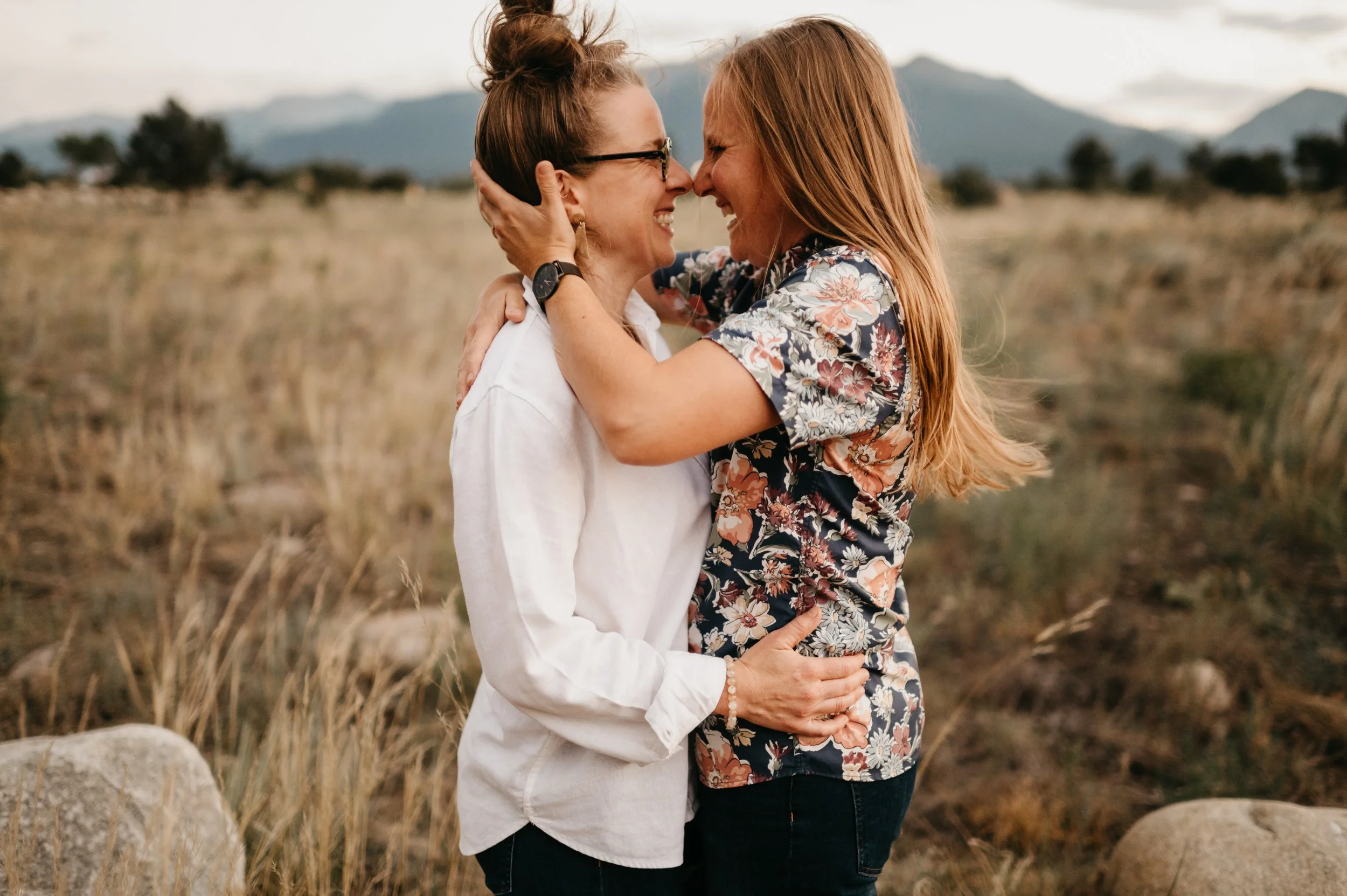
There’s a common belief that lesbian and queer relationships are naturally more emotionally connected, communicative, and intimate. And while many queer couples do experience deep emotional closeness, that closeness can sometimes come with its own challenges.
Many couples come into therapy feeling confused by the intensity of their relationship. They love each other deeply and often feel emotionally intertwined — yet they also find themselves stuck in painful cycles of conflict, emotional overwhelm, shutdown, resentment, or anxiety about the relationship itself.
The issue is rarely that partners care too much.
More often, the struggle is learning how to stay emotionally connected without losing yourself in the process.
For many LGBTQIA+ people, relationships have carried profound meaning: safety, belonging, validation, and home. Because of that, emotional distance can feel especially painful or threatening. A partner needing space, a shift in tone, unresolved conflict, or feeling emotionally disconnected may quickly activate fears of rejection, abandonment, shame, or not being enough.
Over time, couples can unintentionally develop patterns where:
one partner pursues while the other withdraws
conflict escalates quickly
one or both partners over-accommodate to avoid disconnection
emotional closeness becomes tied to emotional safety
individuality begins to feel threatening instead of healthy
Many couples assume the issue is simply communication. But often the deeper challenge is tolerating difference while remaining connected. Can you stay grounded when your partner feels differently than you? Can you tolerate disappointment or distance without immediately interpreting it as danger to the relationship?
Many couples assume the issue is simply communication. But often the deeper challenge is tolerating difference while remaining connected. Can you stay grounded when your partner feels differently than you? Can you tolerate disappointment or distance without immediately interpreting it as danger to the relationship?
Attachment wounds don’t disappear inside loving relationships
One of the most painful realizations for many couples is this:
Being deeply loved does not automatically heal attachment wounds.
A loving partner cannot permanently erase experiences of rejection, shame, emotional inconsistency, abandonment, or relational trauma. Those experiences often continue to live in the nervous system and emerge most intensely in intimate relationships.
This does not mean your relationship is failing.
It often means your relationship has become emotionally important enough that vulnerable parts of you are surfacing.
In lesbian and queer relationships specifically, attachment wounds may also intersect with:
religious trauma or purity culture
experiences of being closeted
family rejection
identity-based shame
prior relational invisibility
fear of “being too much”
pressure to be the “perfect” queer relationship
caretaking or parentified roles developed earlier in life
When conflict happens, couples are often reacting not only to the present moment — but also to years of accumulated emotional meaning.
Why conflict can feel so intense
Many queer couples tell me:
“We communicate all the time, so why do we still get stuck?”
Communication alone is not always the issue.
Often, the deeper struggle is maintaining connection while tolerating difference.
Can you stay grounded when your partner feels differently than you?
Can you tolerate disappointment without collapsing into shame?
Can you remain emotionally present without over-accommodating or becoming defensive?
Can you allow your partner to have separate needs, boundaries, friendships, or desires without interpreting it as abandonment?
These are differentiation skills — the ability to remain connected to yourself while also staying meaningfully connected to another person.
Without these skills, conflict can begin to feel incredibly destabilizing because every disagreement starts carrying larger emotional questions:
“Am I safe?”
“Am I enough?”
“Are we okay?”
“Will this relationship survive distance or disappointment?”
“Do I matter to you?”
When those fears become activated, couples often move into repetitive cycles:
pursuing and withdrawing
criticism and defensiveness
caretaking and resentment
emotional shutdown
conflict avoidance followed by emotional explosion
Emotional closeness is not the enemy
One of the things I work to help couples understand is that emotional intensity itself is not bad.
The goal is not to become less caring, less connected, or less vulnerable.
The goal is to create a relationship where:
closeness does not require self-abandonment
conflict does not immediately threaten emotional safety
differences can exist without panic
repair becomes more possible
intimacy becomes more sustainable
Healthy relationships require both connection and separateness.
Not distance.
Not emotional walls.
But enough steadiness within yourself that your relationship does not have to carry the full weight of your emotional survival.
These are deeply human struggles — especially for people who have experienced shame, rejection, religious trauma, family invalidation, or the pressure to suppress parts of themselves in order to feel loved or safe.
In couples therapy, we often slow these patterns down and explore the emotional meanings underneath the conflict. Rather than focusing only on who is right or wrong, we begin looking at attachment wounds, protective strategies, emotional reactivity, intimacy patterns, and the ways both partners try to manage vulnerability and fear.
The goal is not to become less emotional or less connected.
The goal is to create a relationship where closeness does not require self-abandonment, conflict does not immediately threaten emotional safety, and both partners can remain honest, grounded, and connected — even during difficult moments.
Because healthy intimacy is not built through perfection.
It is built through honesty, repair, emotional resilience, and the ability to stay connected to both yourself and your partner at the same time.
Get the conversation started with me.
Just getting the conversation started is a big step. Click here to sign up for a free consultation where we can all touch base and see if I am a good fit for your support needs.
Photography By: Love and The Lake Photography